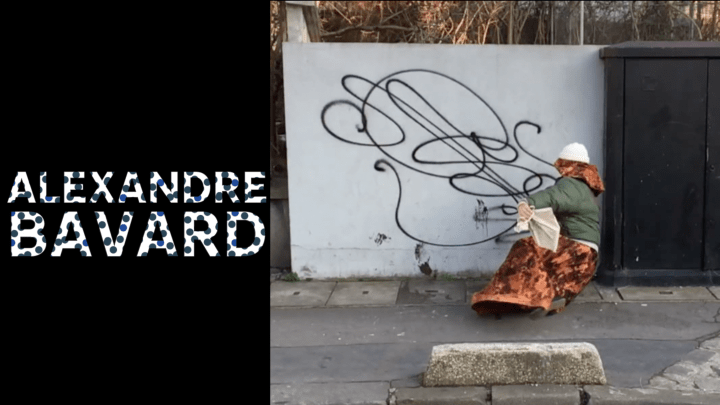
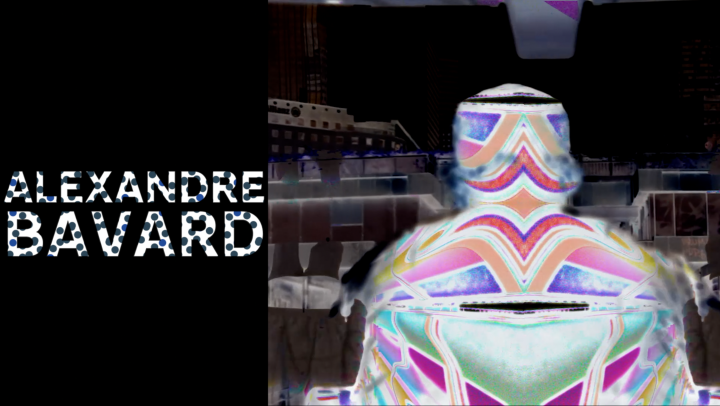
Alexandre Bavard a un point de vu radical sur le graffiti et son esprit. Dans cette deuxième partie, il explique son rapport à l’illégalité, donne sa définition du graffiti et livre les origines de son style très particulier. Enfin, pour celui qui considère que le tag appartient à la rue, il pose la problématique du street art exposé en galerie et en institution. C’est en créant un système de notation du mouvement qu’il est arrivé à consigner la gestuelle de son graffiti. La partition ainsi créée correspond à une chorégraphie effectuée par des danseurs lors de performances.


Alexandre Bavard has a radical point of view on graffiti and its spirit. In this second part, he explains his relationship to illegality, gives his definition of graffiti and delivers the origins of his very particular style. Finally, for the one who considers that the tag belongs to the street, it poses the problematic of street art exposed in gallery and in institution. By creating a dance notation system he managed to record the gesture of his graffiti. The score thus created corresponds to a choreography performed by dancers during performances.


Alexandre Bavard est un jeune artiste parisien né en 1987. Issu du graffiti dans lequel évolue sous le blase de MOSA, il est aussi diplômé de l’école Boulle et des Beaux Arts de Lyon. Baigné dans la pop-culture des années 70 à aujourd’hui ; les jeux vidéo, les films, internet et le rap forment ses principales influences. Ce sont l’école de la rue, du tag mais aussi ses rencontres aux Beaux Arts et sa curiosité pour les voyages et les expériences artistiques qui en font aujourd’hui un artiste multiple.


Alexandre Bavard is a young Parisian artist born in 1987. Having a background in graffiti under the nickname of MOSA, he is also a graduate of the École Boulle and the School of Fine Arts of Lyons. Immersed in pop-culture from the 70s to the present; video games, movies, internet and rap form its main influences. It is the school of the street, the tag but also his meetings at the School of Fine Arts and his curiosity for travel and artistic experiences that make him a multiple artist today.


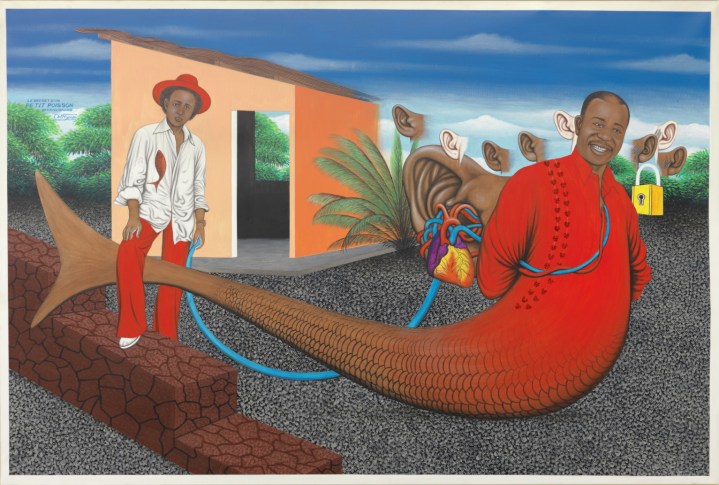
Dans cette dernière partie, Chéri Samba raconte comment il est passé du statut de peintre reconnu au Congo à celui de star international de l’art contemporain africain. Il évoque la place de l’Afrique et de son art dans le monde qu’il considère sous estimée. Enfin il explique l’importance pour tout artiste de ne jamais laisser indifférent.


In this last part, Chéri Samba tells how he went from the status of recognized painter in Congo to the one of international star of contemporary African art. He evokes the place of Africa and its art in the world which he considers underestimated. Finally he explains the importance for any artist to never leave indifferent.


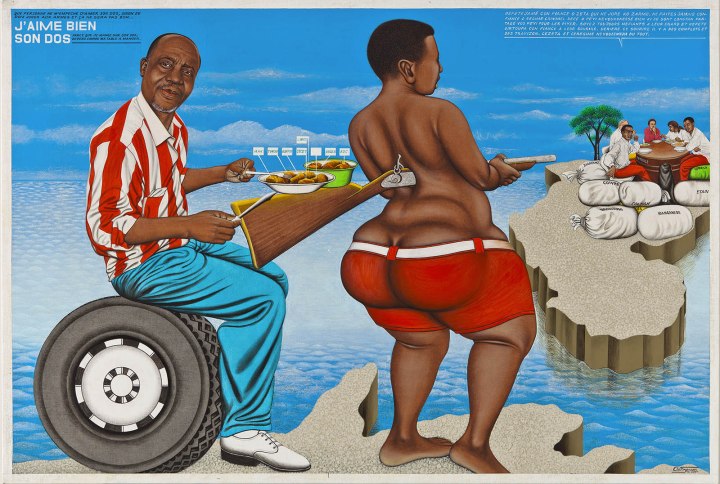
Avec son studio ouvert à Kinshasa, le succès de Chéri Samba est immédiat. Sa renommée attire aussi bien l’éditeur de la revue Bilenge Info, à laquelle il contribuera, que les membres de l’Académie des Beaux Arts. Fier de son art populaire, de son art universel, Chéri Samba raconte comment il a affirmé son style, parle de l’origine de la peinture à bulle et nous explique son sens.


With his studio open in Kinshasa, the success of Chéri Samba is immediate. His reputation attracts both the editor of the Bilenge Info magazine, in which he will be a contributor, as well as the members of the Academy of Fine Arts. Proud of his popular art, of his universal art, Chéri Samba tells how he affirmed his style, talks about the origin of bubble painting and explains its meaning.


Né dans une province rurale du Congo, Chéri Samba est aujourd’hui un des artistes contemporains africains les plus reconnus. Autodidacte et plein d’imagination, il dessine le soir en cachette et vend ses croquis à ses camarades de classe. A 16 ans il part pour Kinshasa et débute en tant que peintre publicitaire. Fort de son succès et doté d’un esprit malicieux, il se lance à son compte ; point de départ de sa carrière.


Born in a rural province of Congo, Chéri Samba is today one of the most recognized contemporary African artists. Self-taught and full of imagination, he draws in the evening in secret and sells his sketches to his classmates. At the age of 16 he left for Kinshasa and started as a commercial painter. Strengthened by his success and endowed with a malicious spirit, he embarks on his own account; the starting point of his career.