Renowned British painter Glenn Brown has redefined the boundaries of contemporary art by merging Surrealism, Photorealism, and historical references into a unique visual language. Born in 1966 in a small mining village in northern England, Brown grew up surrounded by literature and music rather than visual arts. His work is celebrated for its meticulous detail, complex appropriations, and evocative distortions that invite viewers to question the meaning of art and originality.

The Early Foundations of Creativity

Brown’s formative years were marked by a love of books and music, fostered by his parents in rural Norfolk. He recalls his unexpected introduction to visual art through pop music:

“My first introduction to Henri Fantin-Latour’s paintings was by an album cover designed by Peter Saville for New Order.”

Programs from the Open University further expanded his education in art and film, giving him a rich cultural foundation before he ever set foot in an art college.

At art school, Brown’s education varied from academic life drawing to modernist theories of color and abstraction. He was influenced by the German and American art movements of the 1980s, including Gerhard Richter and Sigmar Polke, both of whom shaped his approach to the “death of painting.” As Brown explains:

“You build upon tradition, you play with it, and you break it whenever you want to.”

Painting in a Mediated World

Brown’s career has been deeply influenced by the concept of appropriation, drawing inspiration from artists like Sherrie Levine and Salvador Dalí. He reflects on the process of reinterpreting images:

“I loved Sherrie Levine’s photographs… where you become dizzy because you don’t know what to look at.”

This fascination led to his unique practice of creating “paintings of paintings,” using mediated images as his subject. His work bridges the gap between Photorealism and Surrealism, as seen in his pieces based on Dalí and science fiction illustrator Chris Foss. Brown notes:

“The idea of making photorealist paintings of photorealist paintings… seemed so mind-numbingly boring that I couldn’t bear to do it.”

Instead, he introduces distortions and layers that amplify fantasy and escapism.

A Dialogue Between Paintings – In the Altogether

For his exhibition In the Altogether, presented at Galerie Max Hetzler in Paris, Brown created a series of interconnected works over two years. He explains:

“Nothing was finished, but all the paintings were started, and they were all talking to each other.”

The paintings feature vibrant colors, dynamic contrasts, and intricate glazing techniques that add depth and complexity. For instance, Brown uses Indian yellow—a pigment derived from ox urine—to create unique tones:

“You apply this yellow over the top of a blue, and it turns this very peculiar green.”

One standout piece, The Untitled, is based on an Albrecht Dürer drawing. Brown manipulates the figure to blur gender distinctions, explaining:

“In my mind, it’s both Christ and Mary at the same time.”

The work includes a blank rectangle at the bottom, inviting viewers to title the piece themselves, an interactive gesture that encourages personal interpretation.

Humor, Depth, and the Role of Titles

Brown’s use of humor is central to his work, influenced by the deadpan wit of Marcel Duchamp. Titles like Dirty Little Seahorses and When the Satellite Sings are meant to provoke both laughter and deeper reflection. He describes the importance of titles:

“The title of a work is like adding an invisible color to the painting.”

Through this playful yet intellectual approach, Brown invites viewers to engage with his art on multiple levels, finding meaning and amusement in equal measure.

Glenn Brown’s Artistic Vision

With In the Altogether, Glenn Brown continues to push the boundaries of painting by combining meticulous technique with rich cultural references. His work reimagines the history of art while challenging viewers to question their perceptions. Whether through surreal landscapes or appropriated brushstrokes, Brown’s paintings create a dialogue between the past and present, offering a thought-provoking and playful exploration of humanity and creativity.
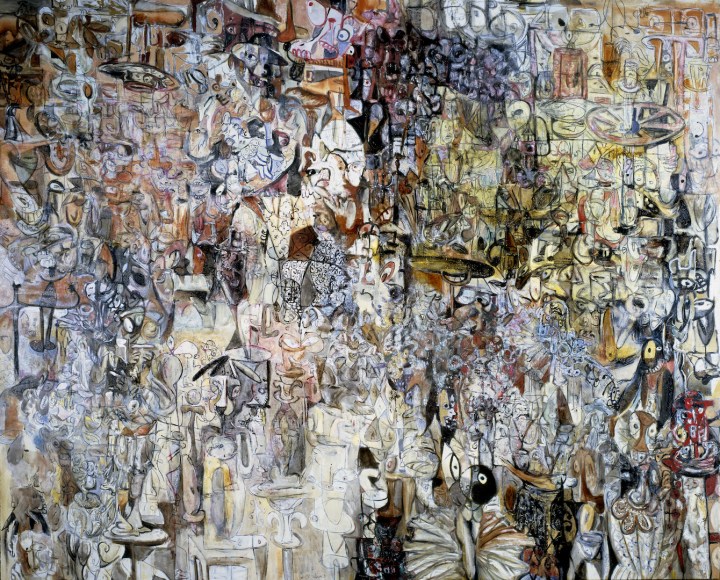
 

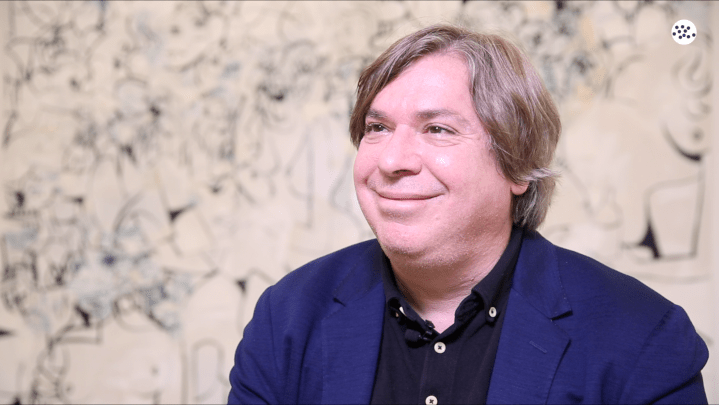
George Condo parle de peintures qu’il a appelées toiles en expansion. Nous prenons l’exemple de Dancing to Miles, une œuvre de 1985 appartenant à la Collection Broad. Condo compare ce style spécifique à la composition musicale et à l’idée de variation. Et cela peut être lié au concept philosophique de Rhizome, une image de pensée appréhendant les multiplicités, développé par Gilles Deleuze et Félix Guattari, ce dernier ayant été un ami de l’artiste.


George Condo parle de peintures qu’il a appelées toiles en expansion. Nous prenons l’exemple de Dancing to Miles, une œuvre de 1985 appartenant à la Collection Broad. Condo compare ce style spécifique à la composition musicale et à l’idée de variation. Et cela peut être lié au concept philosophique de Rhizome, une image de pensée appréhendant les multiplicités, développé par Gilles Deleuze et Félix Guattari, ce dernier ayant été un ami de l’artiste.


George Condo donne ses conseils aux jeunes artistes sur la façon de trouver leur propre voie, leur propre identité. En comparant plusieurs périodes de peinture, en se référant à Picasso, Matisse, Cézanne, Yoko Ono ou Lawrence Weiner, Condo affirme que le défi est de se libérer de toutes les conventions académiques pour trouver son propre style. L’important est d’être honnête dans son travail et de suivre une réflexion qui prenne en compte le croisement de plusieurs formes d’art.


George Condo gives advices to young artists on how to find their own way, their own self. Comparing several periods in painting, referring to Picasso, Matisse, Cézanne, Yoko Ono or Lawrence Weiner, Condo stands that the challenge is to break free from all the trending academic conventions to find his own style. The important thing is to be honest in his work and to follow a thought process that takes into account the crossroads between several forms of art.


George Condo arrive chez son frère à Boston et y travaille dans un atelier de sérigraphie. Il rencontre alors Mark Dagley qui lui propose de rentrer dans son groupe punk. Entre concerts sur le campus de Harvard et dans des clubs alternatifs de New York où il rencontre Basquiat, Condo décide de déménager définitivement dans la Grosse Pomme fasciné par son énergie artistique.

Sa culture littéraire et ses compétences en sérigraphie le mènent jusqu’à l’atelier d’Andy Warhol où il travaille comme assistant. Très ami avec Basquiat, il fréquente le milieu underground, les premiers rappeurs et artistes graffiti. Il peint beaucoup et commence à exposer ; Keith Haring et Warhol achètent ses toiles.

Souhaitant développer son propre style et se démarquer du courant new yorkais du moment mené par Schnabel ou David Salle, il part pour l’Europe. Là il découvre les toiles de maîtres au Louvre et au Prado et fréquente les milieux littéraires et philosophiques de Paris. Il développe alors le Réalisme Artificiel qui définira son oeuvre des vingts années qui suivront.


George Condo arrives at his brother’s home in Boston and works in a silkscreen factory. He then meets Mark Dagley who offers him to join his punk band. Between concerts on the Harvard campus and alternative clubs in New York where he meets Basquiat, Condo decides to move permanently in Big Apple, fascinated by its artistic energy.

His literary culture and silkscreen skills leads him to Andy Warhol’s studio where he works as an assistant. Very good friend with Basquiat, he frequents the underground milieu and meets the first rappers and graffiti artists. He paints a lot and begins to exhibit; Keith Haring and Warhol buy his paintings.

Wishing to develop his own style and to stand out from the current New York trend led by Schnabel or David Salle, he leaves for Europe. There he discovers the old masters in the Louvre and the Prado and rub shoulders with the literary and philosophical intellectuals of Paris. He then develops the Artificial Realism, a style that will define his work for the next twenty years.


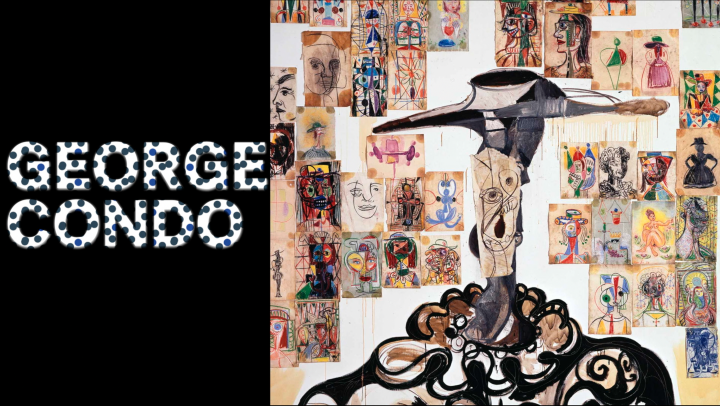
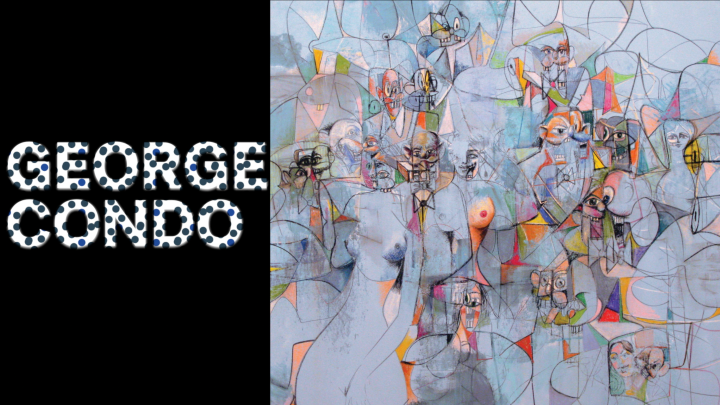
George Condo est un artiste américain né en 1957 et connu pour sa gamme de portraits largement inspirés par le cubisme, le surréalisme et les tableaux de maîtres anciens.

Habile dessinateur  depuis l’âge de 4 ans, il étudie la théorie de la musique et l’histoire de l’art. A travers ses lectures et ses études sur John Cage, Arnold Schoenberg … il identifie les liens entre la philosophie, la musique et la peinture. Le dialogue entre ces différentes langues définit l’art pour George Condo. Après quelques années d’études, il décide de quitter l’université pour devenir peintre.


George Condo is an American artist born in 1957 known for his range of portraits vastly inspired by cubism, surrealism and old masters paintings.

Skilled drawer since the age of 4 he studied music theory and art history. Through his readings and studies of John Cage, Arnold Schoenberg… he identified the connections between philosophy, music and painting. The dialogue between those different languages defines art for George Condo. After a couples of years studying, he decides to quit college to become a painter.