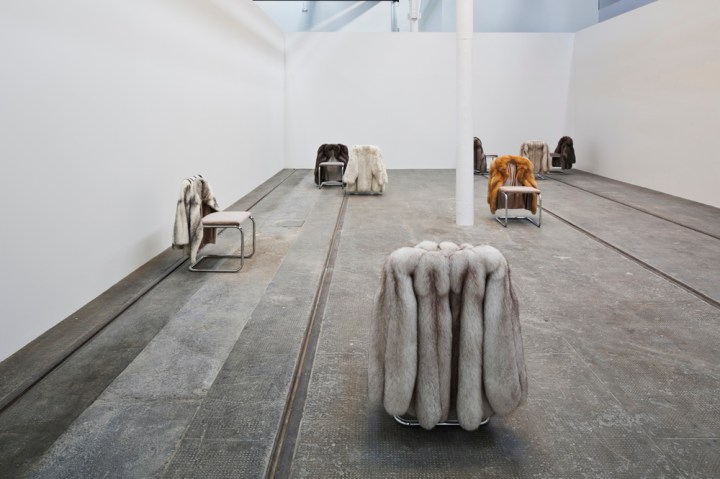
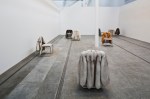
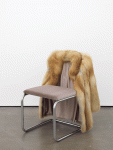
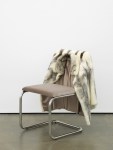
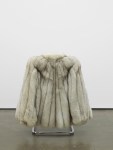
Elles semblent attendre leurs propriétaires qui ne reviendront jamais. Ces vestes de fourrure vintage, tout droit sorties d’un épisode de Dynastie, d’un film de Fassbinder ou d’un numéro de Vogue des années 70, sont chacune cousues sur les chaises du designer moderniste Marcel Breuer et posées dans un espace blanc, vide. Pour cette installation « Infrastruktur » à la galerie Herald St à Londres, l’artiste allemande Nicole Wermers dit avoir été inspirée par ces manteaux que les gens laissent en plan dans les cafés ou les théâtres pour signifier que la place est prise. Par ces « fantômes » glamour, elle dénonce en vrac la solitude moderne, la violence de certains rituels sociaux, les dérives de la surconsommation ou même la séduction délétère du luxe. Le 7 décembre, on saura si Nicole Wermers, finaliste en liste pour le Turner Prize 2015, aura obtenu ou non ce prix prestigieux, mais le mystère qui entoure ces chaises à fourrures lui n’est pas prêt d’être levé.

D.V.


They seem to expect their owners that will never return. These vintage fur jackets, straight out of an episode of Dynasty, a Fassbinder film or a 70’s Vogue issue, are each sewn on the chairs of the modernist designer Marcel Breuer and placed in a white empty space. For this installation “Infrastruktur” on Herald St Gallery in London, the German artist Nicole Wermers said to have been inspired by these coats that people leave behind them in public spaces in order to notify that the place is taken. By these glamorous “ghosts”, she denounces the modern solitude, the violence of certain social rituals, the excesses of over-consumption or even the deleterious seduction of luxury. On December 7, we will know if Nicole Wermers, finalist for the Turner Prize in 2015, has obtained the prestigious award or not, but the mystery surrounding these furry chairs is not ready to be lifted.

D.V.
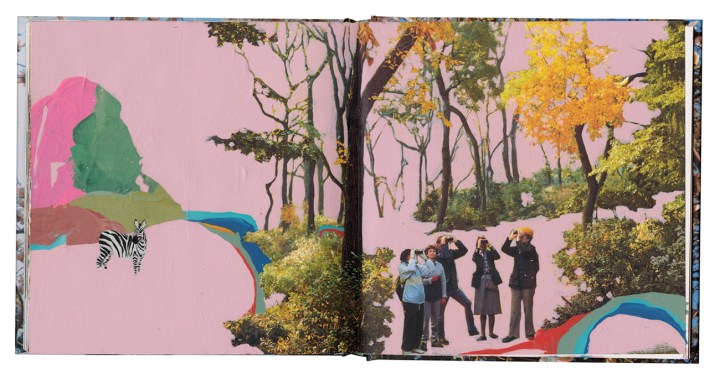
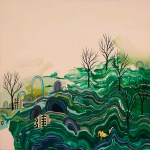
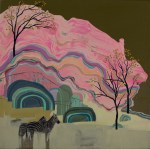
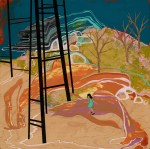
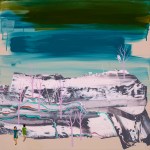
Si vous avez toujours rêvé d’un monde où vivent des licornes qui pètent des arcs-en-ciel, Seonna Hong, elle, l’a certainement visité. Cette peintre et illustratrice américaine, protégée de Takashi Murakami, raconte : “J’ai beaucoup déménagé et je me faisais des amis à l’école primaire en leur dessinant Garfield et Hello Kitty”. Cette touche-à-tout a enseigné l’art aux tout petits, écrit un livre de dessins pour enfants et gagné un Emmy Award pour la production d’un dessin animé. Dans sa dernière série de peintures “If You Lived Here I’d Be Home By Now”, Seonna Hong distille pourtant une certaine mélancolie dans cet univers rose bonbon, dans ses paysages fantastiques qui ne sont pas sans rappeler ceux de Peter Doig.

P.M.


If you’ve always dreamed of a world inhabited by unicorns pooping rainbows, Seonna Hong has already visited it. This American painter and illustrator, spotted by Takashi Murakami, says: “I moved around a lot but I made friends by drawing Garfield, Hello Kitty and Strawberry Shortcake characters in grade school.” This gifted multi-tasker artist taught art to little children, wrote a children’s book and won an Emmy Award as cartoon’s producer. In her latest series of paintings “If You Lived Here I’d Be Home By Now”, Seonna Hong yet exudes a certain melancholy in this pink candy universe, in her fantastic landscapes that are somehow reminiscent of Peter Doig’s.

P.M.

Stop! Dans une époque où tout va vite, où une tendance chasse l’autre, où nous n’avons pas le temps, le photographe hollandais Erwin Olaf décrit l’attente. Celle qui arrête le temps, celle des doutes ou des expectatives. L’artiste explique “C’est une émotion terrible, entre la douleur et la sensation d’être drogué.”
L’occasion d’en discuter avec lui le 12 novembre à la galerie Rabouan Moussion où il est exposé jusqu’au 28 novembre.
Vous trouverez son interview où il nous raconte sa jeunesse et la genèse de son oeuvre ici.


Stop! In an era where everything moves fast, where a trend replace another, where we do not have the time, the Dutch photographer Erwin Olaf describes the Waiting. The one that stops time, the one of doubts or expectations. The artist explains “It is a terrible emotion, between pain and the feeling of being drugged.”
The opportunity to discuss it with him on November 12 to Rabouan Moussion gallery where he is exposed until November 28.
You can find his interview where he tells us about his youth and the genesis of his work here.

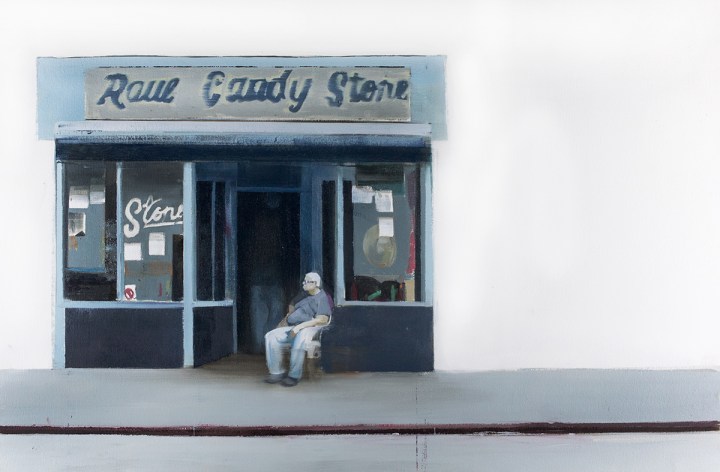
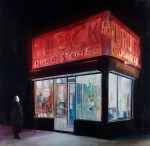
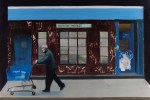
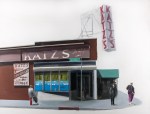
Dans ses peintures à l’huile sur bois comme avec ses installations grandeur nature, l’Américain Brett Amory parle de la solitude, de l’attente. Sous forme de « time capsules », il fixe des moments du quotidien de ces quartiers, notamment à New York, où subsiste encore une âme malgré de multiples ravalements et réhabilitations à des fins commerciales. Son travail documente cette vie urbaine avec un souci esthétique et une palette incroyable de couleurs comme le photographe et peintre Saul Leiter l’avait fait avec le New-York d’après guerre.

P.M.


In his oil paintings on wood as with his life-size installations, the American Brett Amory speaks about the loneliness, about the waiting. In the form of “time capsules”, he fixes moments of these districts’ everyday life, in particular in New York, where remains a neighbourhood soul in spite of real estate dealers. His work documents this urban life with an aesthetic concern concern and an incredible pallet of colors, the same that the photographer and the painter Saül Leiter uses to depict New York in the aftermath of the World War II.


P.M.

Images : Jonathan LeVine Gallery