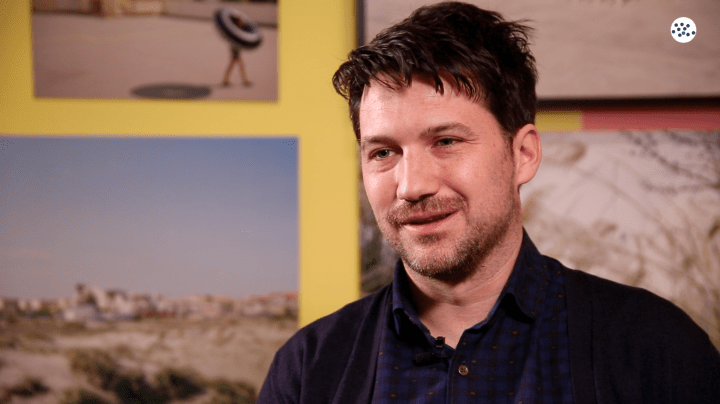
Shane Lynam est un photographe irlandais qui s’est fait sur le tard. Vivant successivement à Dublin, Paris et Bruxelles, il a fait des études d’économie et de sciences politiques qui le destinaient davantage à l’administration publique européenne. Il fait l’acquisition de son premier appareil photo, un peu par accident, à la fin de ses études alors que la vente des appareils numériques explose. Peu initié à l’art, ce n’est qu’au début de sa carrière professionnelle qu’il s’y intéresse et en particulier à la photographie. Lorsqu’il emménage à Paris il est frappé par l’exposition de Raymond Depardon, “La France”, qui aura une immense influence sur son style.

“J’avoue que quand j’étais à l’université à Dublin, je n’allais pas particulièrement voir d’expositions.”

“J’envisageais de faire carrière à Bruxelles, à la Commission européenne.”

“L’exposition de Raymond Depardon m’a vraiment marqué. Ça se voit dans le travail que je fais

“Prendre des photos est rapidement passé d’une activité du week end à quelque chose d’obsessionnel.”

“La photo ne se limite pas au cliché, c’est aussi un moyen d’exprimer des idées en créant une narration. Avec 15 ou 20 photos on peut raconter des histoires”

P.M.


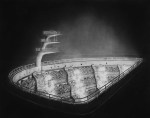
Shane Lynam is an Irish documentary photographer who came to photography relatively late in life. After growing up in Dublin, Paris and Brussels, he studied economics and political science that destined him more for a possible career in the European public administration. He acquired his first camera, quite by accident, at the end of his studies while the sales of digital devices exploded. Although art had not played an important role in his life during his undergrad years, his interest grew rapidly as his career developed and especially in photography. When he moved to Paris he was struck by the exhibition of Raymond Depardon, “La France”, which will have a huge influence on his style.

“I have to say that when I was in college in Dublin I wouldn’t have been going to a lot of art shows.”

“I was thinking of working in Brussels in the European Commission.”

“Raymond Depardon’s show definitely left a mark. You can see it in the work now. It’s the idea of capturing the banal and see how it can be so interesting.”

“Taking pictures very quickly moved from something that was at the week ends to something that was almost obsessional.”

“Photography is not about one shot, it’s very much about how you can express ideas with a narrative. With 15 to 20 photos you can tell stories.”

P.M.

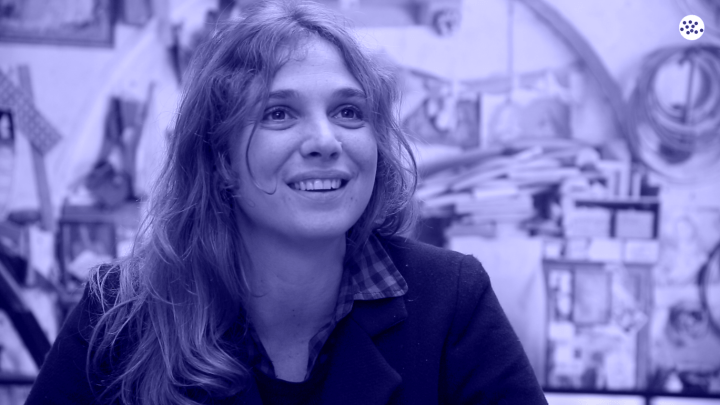
Emma Grosbois est une jeune photographe née à Rennes en 1985. Elle vit entre la France et l’Italie. Avide d’exploration, elle est attirée par les lieux insolites, les personnages banals en apparence mais qui cachent des paradigmes humains. Son oeuvre est une étude anthropologique qui nous fait découvrir les mondes et usages insoupçonnés de communautés et groupes sociaux. Particulièrement portée sur le fait religieux, sa photo est un révélateur de rites ecclésiastiques dont l’objectif et la signification va au delà du simple culte.


Emma Grosbois is a young photographer born in Rennes in 1985. She lives between France and Italy. Eager to explore, she is drawn to unusual places, banal characters in appearance but hiding human paradigms. Her work is an anthropological study that reveals unsuspected worlds and customs of communities and social groups. Particularly focused on the religious behaviours, her work is a pointer of ecclesiastical rites whose purpose and meaning goes beyond the simple worship.

Gonzalo Fuenmayor a réussi à s’affranchir des clichés de la peinture latino-américaine tout en gardant ses racines Colombienne. Né à Barranquilla au nord de la Colombie, il a étudié l’art à New York puis à Boston où, seul immigré, ses camarades attendaient de lui une peinture flamboyante et colorées. Ce qui se traduisait dans ses premières oeuvres:

“J’étais le peintre qui utilisait une palette colorée, faisant de moi le latino qui se démarquait des autres”.

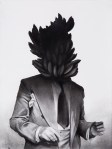
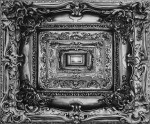
Il était même connu sous le pseudo de Banana Man car ce fruit était présent dans la plupart de ses dessins. Fatigué de faire ce qu’on attendait de lui, de “s’exotiser lui-même”, il a supprimé la couleur de son travail pour ne s’exprimer qu’en noir et blanc, en utilisant le fusain. Un manière pour lui d’engager le dialogue par l’image plutôt que par un schéma de couleur associé à sa culture. La banane, qu’il conserve, devient le symbole de la violence que son pays a connu au début du XXème siècle. Il se réfère notamment à Gabriel Garcia Marquez et son roman Cent ans de Solitude qui évoque le Massacre des bananeraies de 1928. Ses dessins nous rappellent cette période où l’entreprise américaine United Fruit s’est installée en Amérique centrale. Une aubaine économique à double tranchant qui a à la fois enrichi le pays et semé le trouble dans le milieu ouvrier. Un sujet qui a touché plus d’un artiste. On est transporté dans de vastes pièces richement décorées dans un style victorien où l’on sentirait presque le cigare et le rhum. Un confort perturbé par un bananier invasif qui provoque l’embarras. Ou encore des références au rêve américain : super héros, business men ou logos de studios hollywoodiens détournés pour dénoncer leur promesse illusoire.

“Mon travail est à propos de l’anxiété provoquée par le fait d’être un étranger qui ne vit pas dans son pays.”

Gonzalo Fuenmayor vit désormais à Miami, peut-être une façon d’avoir moins le mal du pays et d’être moins influencé par son statut exotique.

P.M.


Gonzalo Fuenmayor managed to overcome the stereotypes of Latin American painting while keeping his Colombian roots. Born in Barranquilla in northern Colombia, he studied art in New York and in Boston where, being the only immigrant, his comrades expected from him flamboyant and colorful paintings. Which resulted in his first works:

“I was the painter using colorful palette that made me the latin american sort of standing out in the crowd”

He was even known as the Banana Man because the fruit was present in most of his drawings. Tired of what was expected from him, of “exoticizing himself”, he removed the color from his work shifted to black and white, using charcoal. A way for him to engage the conversation with imagery rather than with a color scheme associated with his culture. The banana, that he kept in his work, is the symbol of the violence that his country had experienced in the early twentieth century. He is referring in particular to Gabriel Garcia Marquez and his novel One Hundred Years of Solitude that evokes the Banana massacre in 1928. His drawings remind us of a time when the American company United Fruit settled in Central America. A double-edged economic godsend that has both enriched the country and caused confusion among the workers. A topic that has affected more than one artist. We are then transported in large rooms elaborately decorated in Victorian style where one could almost feel the cigar and rum. A comfort disturbed by invasive banana tree that causes embarrassment. Or references to the American dream: superheroes, businessmen or Hollywood studio logos diverted to denounce their illusory promise.

“I’m making work about the anxiety of being from another country and living in another.”

Gonzalo Fuenmayor lives now in Miami, maybe a way to be less homesick and to feel less influenced by his exotic state.

P.M.

L’artiste Claire Morgan native d’Irlande du Nord a été invitée par les musées d’Angers à réaliser une sculpture monumentale en écho à la tapisserie le Chant du Monde de Jean Lurçat. Le résultat est une oeuvre de 8 mètres de long qui est une interprétation contemporaine de l’Apocalypse. Sur un sujet très cher à l’artiste, Plenty More Fish in the Sea dénonce notre surconsommation et notre avidité au mépris des conséquences sur notre planète. Elle représente des animaux (renard, bécasse, pigeon et canard), à notre image, se noyant dans des déchets qui s’accumulent. Là où Jean Lurçat s’était inspiré en son temps de la bombe atomique et de son usage pendant la Seconde Guerre mondiale, Claire Morgan prend exemple sur le désastre écologique et humanitaire d’aujourd’hui. Un désastre auquel nous assistons, dont nous sommes responsables et face auquel nous agissons peu car nous sommes prisonniers de nos désirs futiles et que, quoiqu’il en soit, un de perdu dix de retrouvé (i.e. there are Plenty More Fish in the Sea). L’exposition se tient jusqu’au 6 novembre 2016.


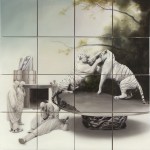
The North Irish artist Claire Morgan was invited by the Angers museums to create a monumental sculpture echoing the tapestry Le Chant du Monde by Jean Lurcat. The result is a work of 8 meters long which is a contemporary interpretation of the Apocalypse. On a subject very dear to the artist, Plenty More Fish in the Sea denounces our consumption and our greed without regards on the consequences on our planet. It represents animals (fox, woodcock, pigeon and duck), modelled on us, drowning themselves in accumulated waste. Where Jean Lurcat was inspired on his time by the atomic bomb and its use during World War II, Claire Morgan takes its cue from today’s ecological and humanitarian disaster. A disaster we are witnessing, that we are responsible for and against which we poorly act just because we are prisoners of our futile desires and that whateve, there are Plenty More Fish in the Sea. The exhibition runs until November 6, 2016.

Apichatpong Weerasethakul nous explique dans cette dernière partie les doutes dans sa carrière, même après avoir gagné le Prix du jury au Festival de Cannes. Il nous explique ensuite comment il est arrivé à l’art vidéo, qui finalement a pris plus de volume que le cinéma. Avant d’évoquer son prochain projet de film qui pour la première fois se déroulera hors de son pays, il donne des conseils sur comment trouver sa voie en tant qu’artiste.

“Même lorsque je suis allé à Cannes pour la deuxième fois avec Tropical Malady, en 2004, je me demandais si je faisais un vrai métier.”

“En fait je fais plus d’art vidéo que de cinéma mais les gens ne le savent pas.”

“Je pense qu’aussi bien pour le cinéma que pour l’art vidéo, ça correspond à ce que je veux exprimer, symboliquement ou pas, sur la vie en Thaïlande.”

“J’ai essayé de trouver la frontière entre réalité et fiction. En fait il faut trouver la réponse à cette question. Evidemment en cherchant cette réponse vous regardez le travail d’autres artistes, ce qu’ils ont fait. Et là, ce que je recommande, et que je fais moi-même, c’est d’intégrer son expérience personnelle dans son travail. Et à force d’intégrer votre propre expérience, l’influence de vos artistes modèles diminuera. S’installera alors une relation authentique entre votre expérience et ce que vous aimez réellement. Ça nous permet de comprendre quelle chose nous manquerait le plus si elle n’existait pas.”

“Mon cinéma est en train d’atteindre ses limites en Thaïlande. Je commence à craindre la censure qui affecte ma créativité et ma prise de décision.”


Apichatpong Weerasethakul explains in this last part the doubts in his career, even after winning the Jury Prize in the Cannes Film Festival. He then explains how he came to video art, which ultimately took more volume than cinema. Before discussing his next film project which for the first time will take place outside his country, he gives advice on how to find his way as an artist.

“Even when I went to Cannes for the second time for Tropical Malady, in 2004, I still ask myself : is this a real profession?”

“In fact I do video art more than cinema but people don’t know that.”

“I think for both cinema and vidéo art, it’s pretty much what I want to say, either symbolically or not, about living in thailand.”

“I tried to find the line between reality and fiction. You just have to find the path to this question. Obviously seeking the answer, you look at the work of other artists, what they did. And here’s what I recommend, and I’m doing myself, is to integrate personal experience in your work. And through integrating your own experience, the importance of your reference artists will decrease. And you will feel the genuine relationship between your experience and what you really love. It allows us to understand what thing would miss most if it did not exist.”

“My cinema starts to reach its limit in Thailand. I start to feel that censorship affects my creativity and decision making.”